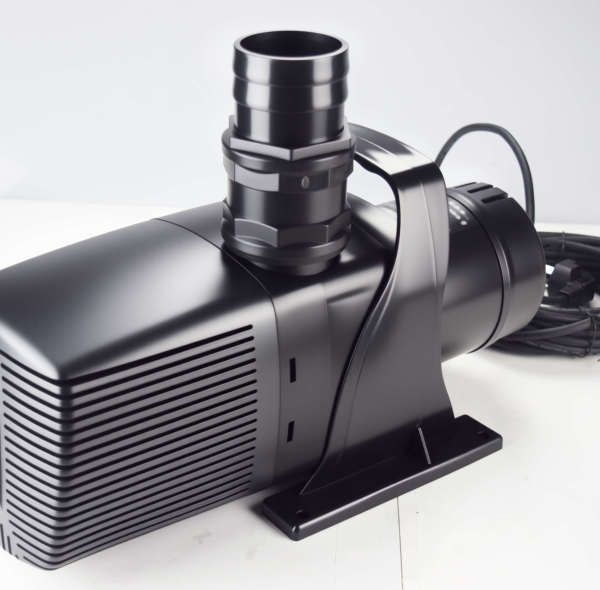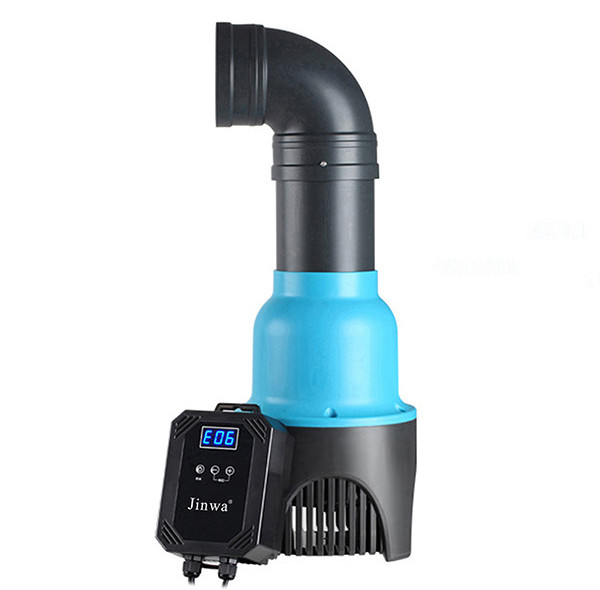
How to Choose a DC Return Pump for a Marine Aquarium?
Choosing the right DC return pump for a marine aquarium is not simply about buying a pump with the highest advertised flow rate. The right choice depends on your aquarium's total water volume, required return flow, total head pressure, plumbing resistance, filtration requirements, and saltwater compatibility.
Compared with traditional fixed-speed pumps, DC variable-speed return pumps allow users to adjust pump speed and water flow, making it easier to fine-tune circulation and match the needs of different filtration systems.
Whether you are a reef aquarium enthusiast, an aquarium equipment distributor, or an aquarium brand developing a new product line, focus on five factors: required flow rate, actual flow at the required head, saltwater compatibility, speed adjustment, and long-term reliability.
What Should You Consider When Choosing a DC Return Pump?
| Selection Factor | What to Check |
|---|---|
| Flow rate | Actual return flow required by the aquarium and sump system. |
| Head pressure | Flow available at the installed pumping height and plumbing resistance. |
| Speed control | Whether pump speed and flow can be adjusted to suit system requirements. |
| Saltwater compatibility | Whether materials in contact with water are suitable for marine environments. |
| Operating performance | Noise, power consumption, stability, and maintenance requirements. |
| Supplier capabilities | Performance data, quality control, OEM/ODM options, and after-sales support. |
What Is a DC Return Pump and What Does It Do in a Marine Aquarium?
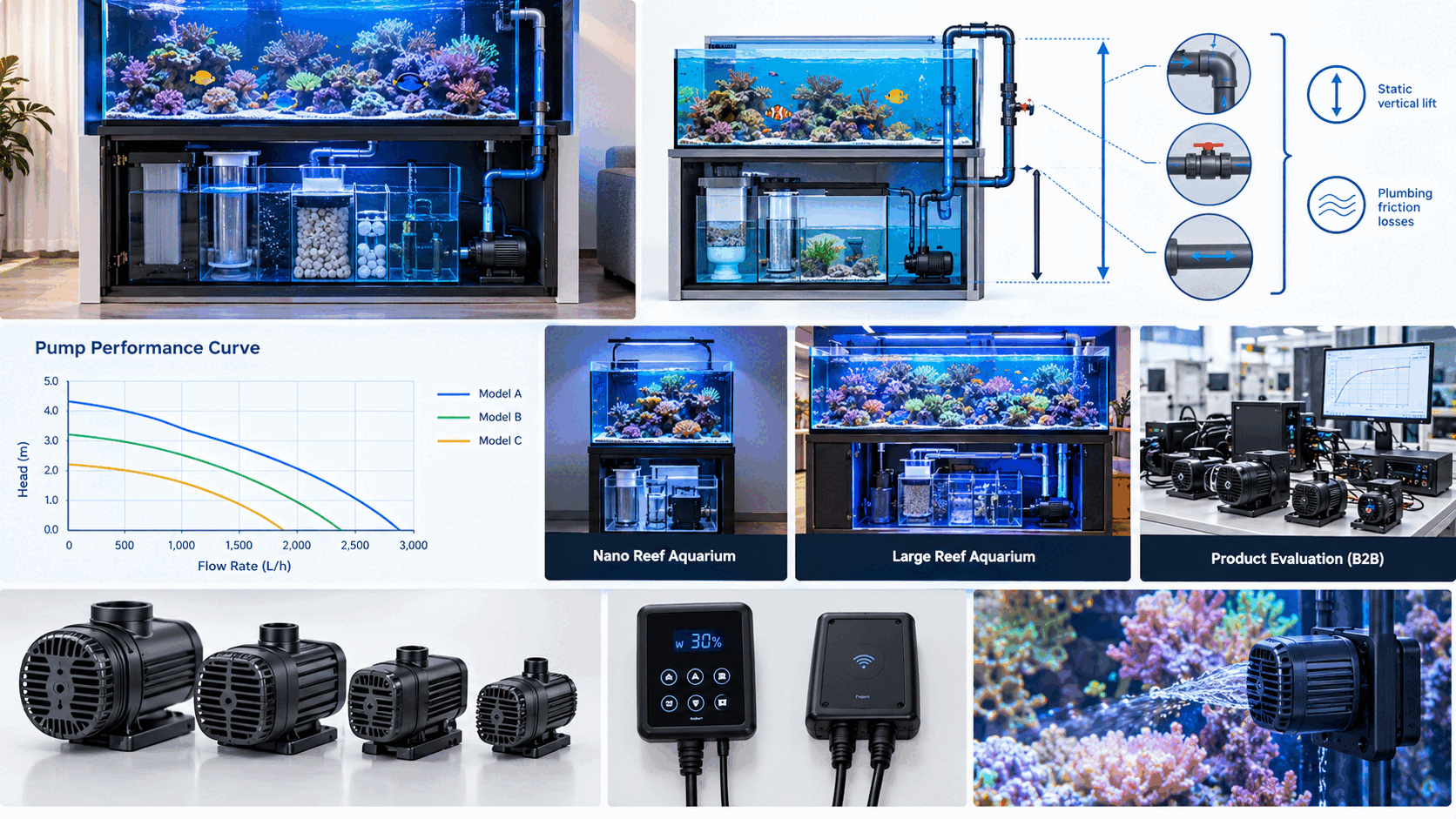
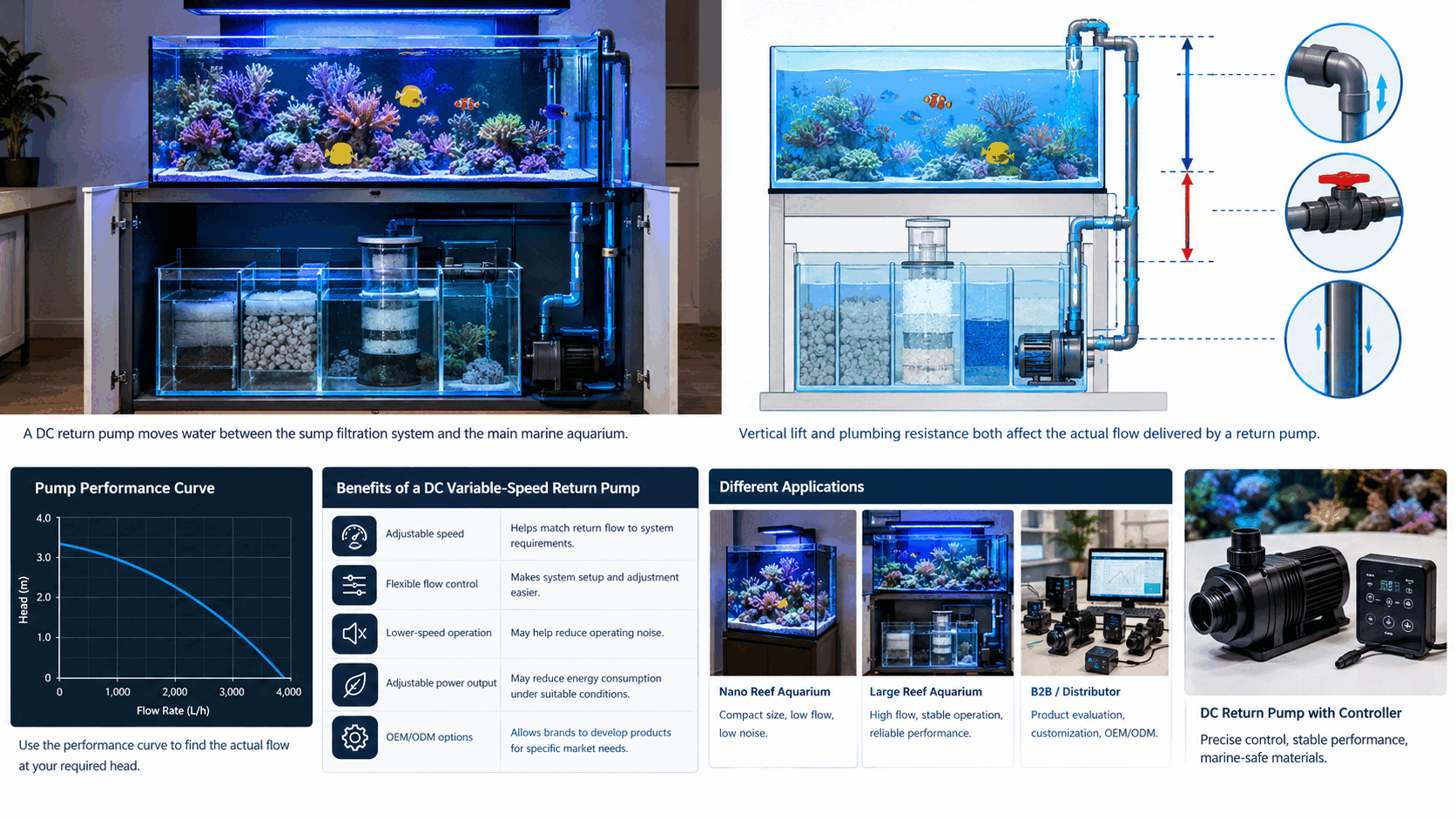
A DC return pump is a direct-current water pump that moves water from the sump or rear filtration chamber back into the main aquarium, maintaining circulation between the two sections.
In a marine aquarium system with a sump, the return pump helps:
- Deliver filtered water back to the display tank.
- Maintain circulation between the display tank and sump.
- Support the operation of filtration equipment.
- Adjust return flow to match the system's design and overflow capacity.
It is important to distinguish return flow from total aquarium circulation. A return pump moves water between the sump and display tank, while wavemakers and circulation pumps create additional water movement inside the aquarium. Reef aquariums often use both because they serve different purposes.
How Do You Calculate the Required Return Pump Flow Rate?
The first step in choosing a DC return pump is to estimate the actual flow rate your aquarium system requires.
Required return flow = Total system water volume × Target turnover rate per hour
For some sump-based marine aquariums, approximately 3–5 turnovers of the total system water volume per hour can serve as an initial estimate. This is a starting point, not a universal rule. The appropriate flow depends on the filtration design, overflow capacity, equipment requirements, and aquarium setup.
Example: Return Flow Requirements for Different Aquarium Sizes
The following estimates use an illustrative target of 3–5 turnovers per hour.
| Total System Water Volume | Estimated Actual Return Flow |
|---|---|
| 100 L | 300–500 L/h |
| 200 L | 600–1,000 L/h |
| 300 L | 900–1,500 L/h |
| 500 L | 1,500–2,500 L/h |
| 1,000 L | 3,000–5,000 L/h |
These figures represent the target flow delivered under actual operating conditions, not the pump's maximum rated flow at zero head.
For aquarium-specific guidance, consult Bulk Reef Supply and compare its recommendations with the requirements of your particular aquarium system.
Why Should You Avoid Choosing a Pump Based Only on Its Maximum Flow Rate?
A pump advertised at 3,000 L/h may deliver substantially less flow once installed because water must overcome vertical elevation and plumbing resistance.
When comparing DC return pumps, check the manufacturer's performance curve to determine how much flow each model can provide at your required head pressure. The pump should also operate within the aquarium's overflow capacity. Excessive return flow can cause unnecessary noise, unstable water levels, or drainage problems.
Why Does Head Pressure Affect Actual Pump Flow?
Head pressure determines how much resistance the pump must overcome to deliver water to the aquarium. For a centrifugal pump, the available flow generally decreases as the required head increases.
- Vertical lift: The vertical height difference between the pump and its return outlet.
- Pipe friction: Resistance caused by water flowing through the plumbing.
- Elbows and valves: Additional resistance from bends, valves, and fittings.
- Pipe diameter: Undersized plumbing can increase friction losses.
- Equipment resistance: Additional components in the flow path can reduce delivered flow.
What Is a Pump Performance Curve?
A pump performance curve is a graph showing the relationship between flow rate and head pressure under specified operating conditions.
Use it to determine whether a pump can deliver your required flow at the expected head. Do not assume that maximum flow and maximum head can be achieved simultaneously.
For a deeper understanding of pump system selection, refer to the U.S. Department of Energy's industry resource, Improving Pumping System Performance: A Sourcebook for Industry.
What Are the Benefits of a DC Variable-Speed Return Pump?
DC variable-speed return pumps offer adjustable operation, which can be particularly useful when fine-tuning flow in marine aquarium filtration systems.
| Feature | Practical Benefit |
|---|---|
| Adjustable speed | Helps match return flow to system requirements. |
| Flexible flow control | Makes system setup and adjustment easier. |
| Lower-speed operation | May help reduce operating noise. |
| Adjustable power output | May reduce energy consumption under suitable conditions. |
| OEM/ODM options | Allows brands to develop products for specific market needs. |
Can a DC Return Pump Reduce Energy Consumption?
Potentially, yes. Adjusting pump speed to meet actual system requirements may reduce energy use compared with operating a pump continuously at a higher output.
However, energy savings depend on the motor, pump design, operating point, hydraulic system, and control strategy. DC technology alone does not guarantee that every model will consume less power than every AC alternative.
How Important Is Noise Performance?
Noise matters in home aquariums, offices, retail displays, and other environments where the aquarium is close to people.
The actual noise level depends on motor design, pump speed, vibration, mounting, plumbing, and water movement. A properly sized pump operating at an appropriate speed may provide quieter operation than an oversized pump running unnecessarily hard.
For aquarium equipment brands, request verified noise measurements and confirm the conditions under which they were recorded.
How Should You Choose a DC Return Pump for Different Applications?
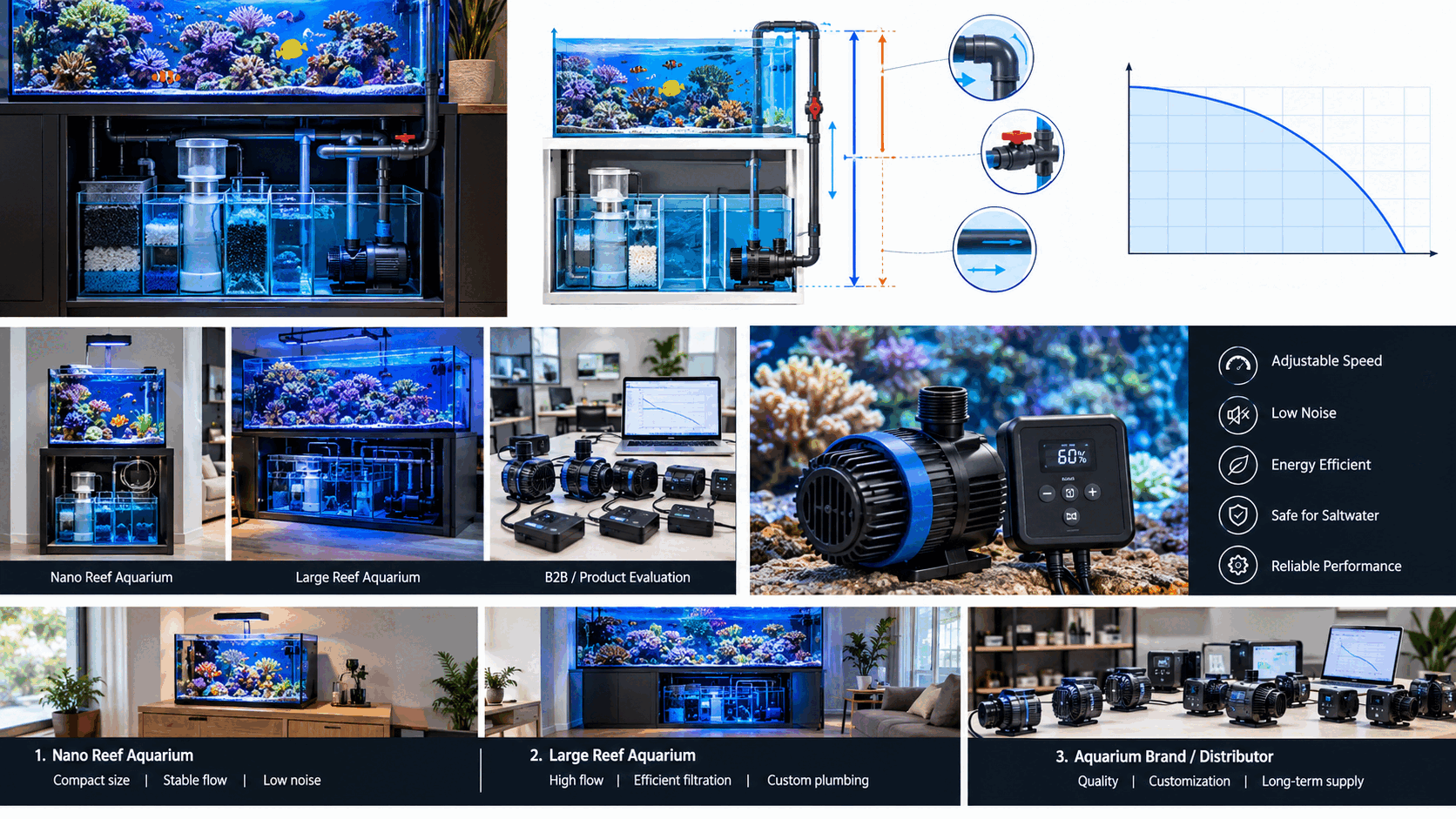
Scenario 1: Choosing a Pump for a Nano Reef Aquarium
For a small marine aquarium, prioritize compact dimensions, stable low-flow operation, low noise, and compatibility with the available filtration space.
An oversized pump may be difficult to adjust to the desired flow range. Check the model's minimum operating output as well as its maximum capacity.
Scenario 2: Choosing a Pump for a Large Reef Aquarium
For a medium or large reef system, focus on actual flow at the required head, overflow capacity, plumbing configuration, and the flow requirements of the filtration system.
A pump with adjustable speed can help fine-tune the system after installation, but its operating range must still match the aquarium's needs.
Scenario 3: Selecting a Pump for an Aquarium Brand or Distribution Business
For B2B buyers, pump selection involves more than hydraulic performance. Evaluate:
- Product specifications and performance curves.
- Material compatibility with saltwater.
- Quality inspection and reliability testing.
- Controller options and customization capabilities.
- Minimum order quantities and sample availability.
- Production lead times, warranty terms, and spare parts support.
Working with an experienced pump manufacturer can help aquarium brands develop products that fit their target market and technical requirements.
What Should B2B Buyers Confirm Before Purchasing DC Marine Aquarium Pumps?
| Item to Confirm | Why It Matters |
|---|---|
| Maximum flow and head | Establishes the pump's operating limits. |
| Performance curve | Shows expected flow at different head pressures. |
| Power consumption | Helps evaluate operating costs. |
| Wetted materials | Helps establish suitability for saltwater. |
| Controller functions | Confirms available speed adjustment and operating modes. |
| Protection functions | Identifies model-specific safety features. |
| Quality testing | Clarifies the manufacturer's inspection procedures. |
| Commercial terms | Confirms MOQ, samples, lead times, and warranty. |
Do not assume that all DC pumps support the same control functions or protection features. Request model-specific specifications and confirm your requirements before ordering.
Frequently Asked Questions About DC Return Pumps for Marine Aquariums
1. What Flow Rate Do I Need for a Marine Aquarium Return Pump?
Start with the total system water volume and the filtration system's target turnover rate. Then account for head pressure and plumbing losses to determine the required pump output under actual operating conditions.
2. Can I Use Any DC Return Pump in a Saltwater Aquarium?
No. Confirm that the specific pump model is suitable for saltwater use. The pump housing, shaft, seals, and other wetted components must be compatible with the intended marine environment.
3. Is a Higher-Flow Return Pump Always Better?
No. The appropriate flow rate depends on the aquarium's filtration design and overflow capacity. Excessive flow may cause unnecessary noise or water-level instability. Select a pump that can deliver the required flow without exceeding system limitations.
4. What Is the Difference Between a DC Return Pump and a Wavemaker?
A DC return pump transfers water between the sump and display aquarium. A wavemaker creates water movement within the display tank. Reef aquariums often use both because they serve different circulation functions.
5. How Can I Find the Actual Flow Rate at My Required Head?
Consult the manufacturer's pump performance curve. Find the expected flow at the calculated head pressure, and account for additional plumbing resistance where necessary. If the system is complex, verify the flow after installation.
6. Can DC Return Pumps Support OEM/ODM and Private-Label Customization?
Customization depends on the manufacturer's product platform and capabilities. Aquarium brands and distributors should confirm available models, controller configurations, branding options, minimum order quantities, sample arrangements, and production lead times.
7. How Can I Compare DC Return Pumps from Different Manufacturers?
Compare performance curves, power consumption at comparable operating points, saltwater compatibility, control options, noise data, quality requirements, warranty terms, and commercial conditions. Comparing maximum flow rates alone may lead to an unsuitable selection.
Conclusion: How Do You Choose the Right DC Return Pump for a Marine Aquarium?
Choosing the right DC return pump comes down to three essential steps:
- Calculate the required return flow based on the aquarium's total water volume and filtration requirements.
- Evaluate head pressure and plumbing losses to select a pump that can deliver sufficient flow under actual operating conditions.
- Verify saltwater compatibility and product quality, including speed control, operating performance, maintenance requirements, and supplier support.
For aquarium brands, importers, and distributors, it is equally important to evaluate the manufacturer's technical expertise, quality control, customization capabilities, and long-term supply support.
Looking for a DC Return Pump Manufacturer for Your Aquarium Business?
Jinwa Aquatics has specialized in variable-speed pump technology since 2009, providing aquarium and pond pump manufacturing solutions for B2B customers.
If you are developing a marine aquarium pump product or looking for an OEM/ODM manufacturing partner, contact Jinwa Aquatics to discuss your required flow rate, head pressure, controller configuration, and customization needs.
Explore Jinwa Aquatics Request a QuoteReplace the Request a Quote link with your dedicated inquiry page URL when available.
References and Further Reading
- U.S. Department of Energy — Improving Pumping System Performance: A Sourcebook for Industry. An industry resource covering pump performance curves, flow, head, and pumping system selection.
- Bulk Reef Supply — Bulk Reef Supply. Aquarium equipment resources and guidance for reef aquarium return pump selection.
- EcoTech Marine — EcoTech Marine Support. Manufacturer support resources for aquarium equipment and pump-related technical questions.
- Red Sea — Red Sea. Marine aquarium equipment and system documentation for reef aquarium setup and operation.